

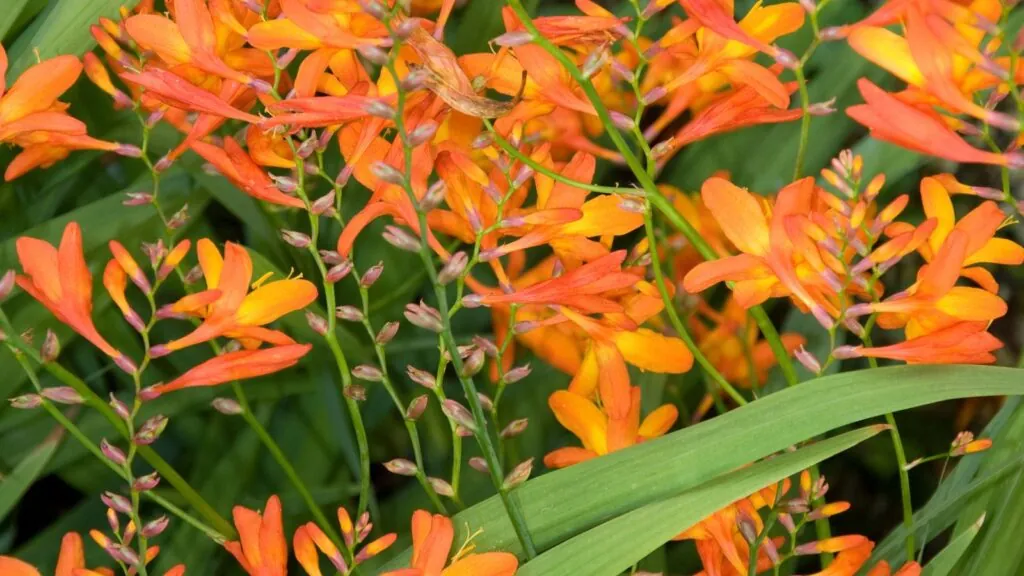
Montbretia is one of the most vibrant and visually striking perennial plants found in UK gardens. Its fiery orange and red blooms create a tropical appearance, brightening borders, pathways, and flower beds during summer months. Known for its resilience and low maintenance, montbretia is an excellent choice for gardeners seeking colour without the need for constant care. The plant also attracts pollinators like bees and butterflies, adding life to any garden.
Despite its beauty, montbretia requires some knowledge to flourish successfully. Understanding how to plant, care for, and manage montbretia ensures gardeners enjoy its blooms year after year. While often compared to crocosmia, montbretia has stronger stems and larger flowers, making it ideal for creating bold, vibrant garden displays. With the right guidance, montbretia can become a long-lasting highlight in UK landscapes.
What is Montbretia?
Montbretia, scientifically known as Crocosmia x crocosmiiflora, is a hybrid flowering plant originating from South Africa. It is part of the iris family, Iridaceae, and has become a favourite in UK gardens due to its striking colour palette and hardiness. Many gardeners confuse crocosmia and montbretia, but the latter typically has larger, more robust flowers and clumping growth. Understanding this difference is important for proper care and placement in the garden.
Several montbretia varieties thrive in the UK, including montbretia Lucifer, orange montbretia, and red montbretia. Each variety offers unique colour intensity and bloom timing, allowing gardeners to select plants that suit their aesthetic preferences. Montbretia flowering time generally occurs between July and September, providing a prolonged period of vibrant garden colour. With the right environment, montbretia can bloom consistently and remain a garden highlight year after year.
Planting Montbretia in the UK
Planting montbretia in the UK requires attention to soil, sunlight, and spacing. Montbretia thrives in well-drained soil enriched with compost, and it prefers full sun but can tolerate partial shade. Preparing the planting area properly ensures montbretia bulbs establish strong roots, promoting healthy growth and abundant flowering. Gardeners should remove weeds and loosen soil before planting for optimal results.
Montbretia bulbs should be planted at a depth of approximately 5–7cm, with spacing of 15–20cm between bulbs. This allows the plant to clump naturally without overcrowding, improving air circulation and reducing the risk of disease. By following these steps, montbretia will establish successfully, producing vibrant blooms that enhance garden borders. Proper planning and planting techniques are essential for long-term success with montbretia in UK gardens.
Caring for Montbretia
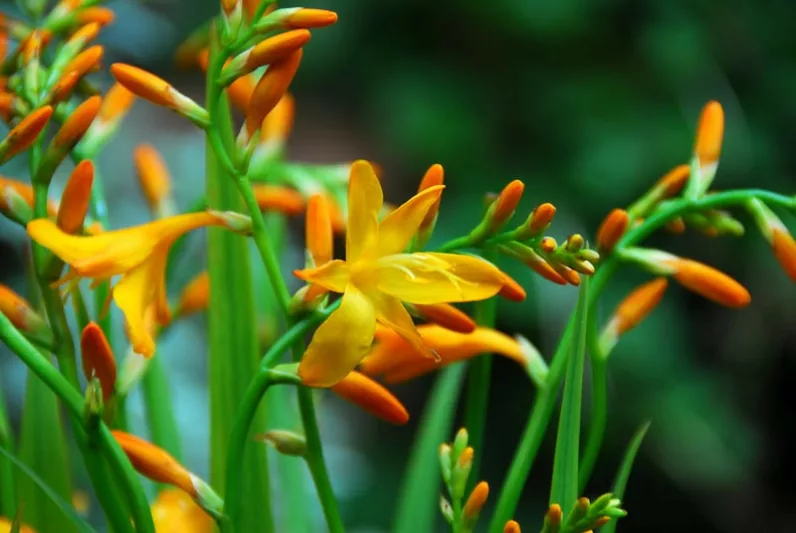
Montbretia care in the UK involves regular watering, fertilising, and mulching. Watering should be consistent during dry spells, while organic mulch helps retain moisture and suppress weeds. Fertilising montbretia during the growing season encourages strong stem development and prolific flowering. These simple steps ensure montbretia remains healthy and visually appealing throughout the season.
Pruning montbretia at the correct time is vital for sustained growth. In the UK, cutting back montbretia after flowering encourages new shoots and prevents the plant from becoming untidy or spreading uncontrollably. Dividing montbretia corms every three to five years helps rejuvenate the plant and ensures continued flowering. Proper care practices make montbretia a manageable yet spectacular addition to any garden.
Popular Varieties of Montbretia
Montbretia Lucifer is one of the most popular varieties in the UK due to its vivid red blooms and strong growth habit. This variety is ideal for borders, providing a striking contrast against green foliage and other summer flowers. Orange montbretia is another favourite, offering a warm and inviting colour palette that brightens garden spaces. Red montbretia provides bold visual appeal, creating a dramatic and tropical feel in the garden.
Gardeners can also experiment with different montbretia varieties to create layered planting schemes. Combining montbretia with perennials such as salvias, hostas, or ornamental grasses enhances garden aesthetics and prolongs seasonal interest. By selecting the right variety and pairing it with compatible plants, montbretia becomes an adaptable and versatile choice for any UK garden.
Montbretia in the Wild and Invasiveness
Montbretia can become invasive if left unmanaged, as it spreads through underground corms. In some areas of the UK, montbretia has escaped gardens and established itself in wild spaces, outcompeting native species. Gardeners must monitor montbretia carefully, particularly in coastal or natural settings, to prevent uncontrolled spread. Awareness of invasiveness ensures montbretia enhances rather than disrupts the local ecosystem.
If montbretia becomes a problem, several management strategies are effective. Regularly removing flowers, lifting and dividing corms, and digging up excess plants can control unwanted spread. Despite its invasive potential, montbretia remains a highly rewarding plant when grown responsibly. Knowledgeable UK gardeners can enjoy its beauty while maintaining ecological balance in their outdoor spaces.
Montbretia Bulbs and Propagation
Montbretia propagation is simple, primarily through bulbs or corm division. Corms should be lifted in late autumn once foliage dies back and stored in a cool, dry place over winter. Dividing corms every few years prevents overcrowding and maintains vigorous flowering. This technique ensures montbretia continues to thrive and fill garden borders effectively.
Planting montbretia bulbs is best done in late spring or early summer. Ensure the bulbs are healthy and free from damage, as this directly affects growth and flowering. By following proper planting and propagation practices, montbretia gardeners in the UK can enjoy strong, colourful displays season after season, while maintaining control over its spread.
Conclusion
Montbretia is a visually stunning and hardy perennial, perfect for UK gardens. Its fiery blooms, ease of care, and adaptability make it ideal for both beginner and experienced gardeners. By understanding planting, care, and management techniques, montbretia can thrive while remaining controlled, offering a long-lasting splash of summer colour.
With the right knowledge, gardeners can enjoy montbretia year after year without worrying about invasiveness or poor growth. Regular maintenance, appropriate pruning, and careful propagation ensure healthy plants and vibrant displays. Montbretia truly embodies the perfect combination of beauty and resilience in the UK garden setting.
You may also read: DIY Sofa Cleaning Methods
