

The Mirror and the Light is the final novel in Hilary Mantel’s acclaimed Wolf Hall trilogy, and it marks a monumental achievement in historical fiction. The novel follows Thomas Cromwell, exploring his rise to power and the precarious position he holds in the court of Henry VIII. With political intrigue, personal betrayal, and moments of introspection, The Mirror and the Light brings readers into the heart of Tudor England, offering a vivid and immersive narrative that blends historical accuracy with masterful storytelling.
Beyond its historical context, The Mirror and the Light is a meditation on human nature, ambition, and morality. Mantel’s prose is both intricate and evocative, capturing the subtle shifts in power that defined Cromwell’s life. The novel allows readers to engage deeply with its characters, particularly Cromwell, whose intelligence, vulnerability, and moral complexity are explored with nuance. The Mirror and the Light is not just a story about politics; it is a reflection on the human condition, loyalty, and survival in a ruthless world.
About Hilary Mantel
Hilary Mantel, the author of The Mirror and the Light, was celebrated for her contribution to modern historical fiction. Her literary career was marked by two Booker Prizes and numerous accolades for her narrative skill and deep research. Mantel’s works, including The Mirror and the Light, focus on Tudor England, portraying historical figures with psychological depth and dramatic intensity. She transformed historical fiction into a genre capable of capturing both the political and personal complexities of the past.
Mantel’s approach to writing The Mirror and the Light involved meticulous research and careful interpretation of historical records. Her aim was not merely to recount events but to humanise historical figures, presenting them as complex individuals shaped by circumstance, ambition, and desire. In The Mirror and the Light, she delves into Cromwell’s psyche, illustrating his rise to prominence, the enemies he makes, and the moral dilemmas he faces. Mantel’s legacy endures through this remarkable novel, which closes the trilogy with power and elegance.
Overview of The Mirror and the Light
The Mirror and the Light was published in March 2020 and serves as the final chapter in the Wolf Hall trilogy. Set during the tumultuous period of Tudor England, the novel begins after the execution of Anne Boleyn, exploring Cromwell’s attempts to maintain his influence and navigate the treacherous court of Henry VIII. The Mirror and the Light examines the political intricacies of the time while also offering rich character-driven storytelling that makes history feel immediate and personal.
The plot of The Mirror and the Light highlights Cromwell’s careful manoeuvring between loyalty, ambition, and survival. Mantel portrays the dangers he faces, from rivals in the court to shifting political alliances, illustrating the fragility of power in Tudor England. Themes of betrayal, morality, and human frailty permeate the narrative, making it a gripping exploration of character and circumstance. The Mirror and the Light is both a historical epic and an intimate study of one of history’s most compelling figures.
Analysis and Key Themes

The Mirror and the Light explores themes of power, ambition, loyalty, and betrayal, which dominate the narrative and reflect the instability of Tudor politics. Cromwell’s journey demonstrates how ambition can bring success and danger simultaneously. Mantel examines the moral complexities of leadership and survival, showing how personal decisions intersect with broader political consequences. The novel’s rich detail allows readers to experience both the grandeur and the peril of life at court.
Symbolism is central to The Mirror and the Light, with the “mirror” representing reflection and self-awareness, and the “light” symbolising knowledge, insight, and truth. These motifs emphasise the novel’s exploration of conscience and human understanding. Mantel’s style blends historical precision with imaginative storytelling, making The Mirror and the Light a layered work that is intellectually stimulating and emotionally resonant. Its themes resonate with contemporary readers while staying rooted in Tudor history.
Reception and Reviews
The Mirror and the Light received critical acclaim from literary reviewers, who praised Mantel’s research, prose, and the psychological depth she brings to Cromwell. Publications such as The Guardian and The Telegraph lauded the novel as a landmark in historical fiction. Readers also appreciated its complexity, richness, and the satisfying conclusion it provides to the Wolf Hall trilogy. The Mirror and the Light solidified Mantel’s reputation as one of the finest historical novelists of her generation.
While some critics noted the novel’s length and dense narrative as a challenge, most agreed these aspects were necessary to convey the intricate details of Tudor politics and personal dynamics. Overall, The Mirror and the Light was celebrated as both a literary and historical achievement, offering readers a fully realised portrayal of one of England’s most fascinating periods. Its enduring impact ensures it remains widely read and discussed.
TV Series Adaptation
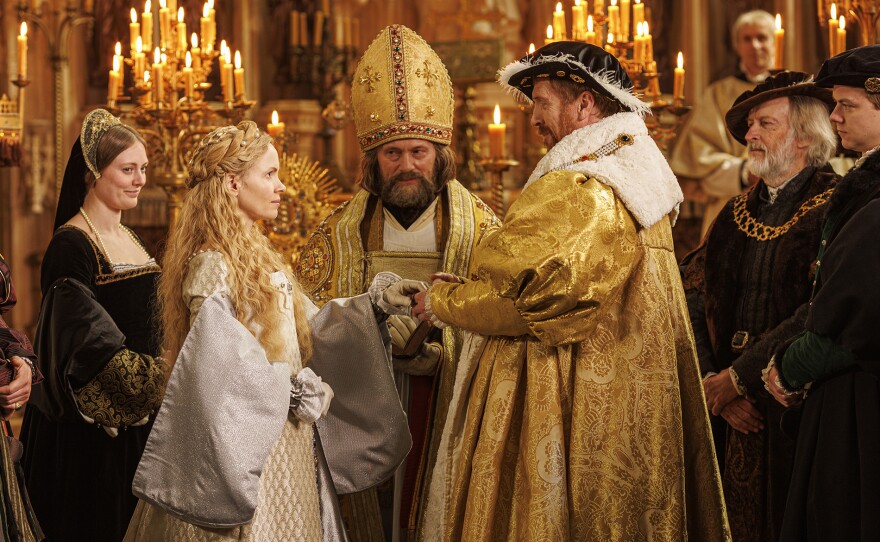
The Mirror and the Light has been adapted for television, continuing the story begun in Wolf Hall and Bring Up the Bodies. The series stars Mark Rylance as Thomas Cromwell and Damien Lewis as Henry VIII, capturing the political tension and character complexity of Mantel’s novel. The adaptation allows audiences to experience the intricate events and emotional depth of The Mirror and the Light visually, complementing the narrative and bringing historical figures vividly to life.
The TV adaptation of The Mirror and the Light has received positive responses for its authenticity, production quality, and performances. While minor differences exist between the book and the series, the adaptation retains the novel’s core themes of ambition, morality, and survival. It has introduced Mantel’s work to a broader audience, ensuring that The Mirror and the Light reaches both literary fans and viewers seeking compelling historical drama.
Why The Mirror and the Light Matters
The Mirror and the Light is significant as both a literary triumph and a historical exploration. It concludes the Wolf Hall trilogy with insight, drama, and psychological depth. By exploring the life of Thomas Cromwell, the novel provides a nuanced portrayal of power, loyalty, and morality during Tudor England. The Mirror and the Light is more than a story; it is a reflection on human nature and the consequences of ambition in an unpredictable world.
Mantel’s work has redefined historical fiction, combining rigorous research with literary artistry. The Mirror and the Light is a benchmark for storytelling that engages the mind and the heart, offering readers historical accuracy, philosophical reflection, and unforgettable characters. It is essential reading for anyone interested in Tudor history, political intrigue, and the intricate lives of individuals navigating a dangerous and fascinating world.
Conclusion
The Mirror and the Light is a monumental work that concludes Hilary Mantel’s Wolf Hall trilogy with brilliance and depth. Its exploration of Thomas Cromwell’s life, combined with historical richness and literary artistry, makes it an unforgettable novel. The TV adaptation further brings the story to life, extending the impact of Mantel’s work. The Mirror and the Light remains a landmark in historical fiction, celebrated for its storytelling, thematic depth, and profound characterisation.
You may also read: Chelsea Flower Show 2025 Show Gardens and Exhibits
